
Image
share:


Your role in the canine digestion process usually involves the 'before' and 'after.' Here's a look at what happens in the 'during' stage.
Dogs need to eat nutritious food in order to live a healthy life. The components of food that give them all the energy and raw materials they need are called 'nutrients.' After dogs eat, the nutrients in the food are digested, absorbed, and processed (or 'metabolised') by the body to fulfil the dog's needs.
Food gets broken down into a simple form that can be absorbed and used by the body in a process called 'digestion.' In mammals, this process takes place in the digestive or alimentary tract, often simply called the 'gut.' This is a hollow tube that the food passes through and is acted upon by acids and enzymes from organs, like the stomach and small intestine, that discharge into the tube. These digestive enzymes speed up the process of hydrolysis, by which food is broken down.
The three major classes of nutrients that need to be digested are carbohydrates, protein, and fat. Other nutrients (minerals, vitamins, and water) are absorbed in more or less the same form as they are found in food. But they may need to be released from proteins, fats, or carbohydrates before they can be absorbed.
Now, let's find out how digestion really happens:
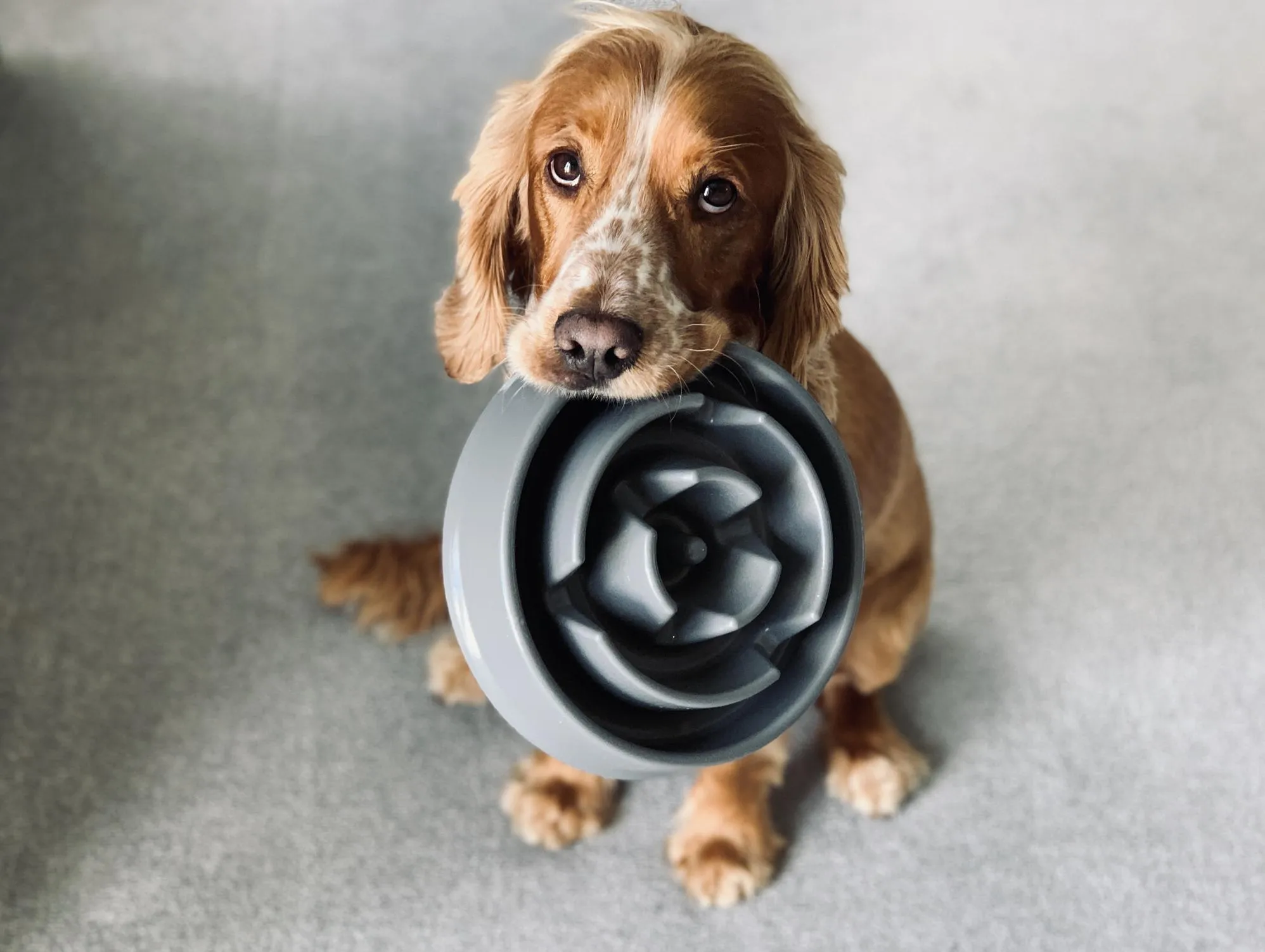
Digestion begins in the mouth, where food is mechanically broken down and mixed with saliva before it's swallowed. Many dogs have a tendency to bolt down their food, chewing only the toughest of foods before swallowing.
Once the food arrives in the mouth, its taste and physical presence help increase saliva production. Saliva contains mucus, a very effective lubricant that coats the food to help with swallowing.
When food is swallowed, it passes down the oesophagus and arrives at the stomach within a few seconds. The stomach has several functions. It's a storage organ; it's a mixing bag (where more digestive enzymes are added to the food); and it's a regulator valve that controls the rate of flow into the small intestine. Protein digestion begins in the stomach.
Stomach secretions contain protein-digesting enzymes (proteases), hydrochloric acid, and mucus. The main enzyme, pepsin, is activated by hydrochloric acid, which also creates the right environment for enzyme function. Mucus lubricates the food and protects the stomach lining from being digested by its own enzymes.
The muscular stomach wall mixes contents into a liquid called chyme and pushes it towards the pyloric sphincter - a ring that regulates flow into the duodenum.
The rate of emptying slows when acids, fats, or irritants are detected in the duodenum, ensuring contents are sufficiently digested before moving on.
The duodenum is the main site for digestion in the small intestine. Here, more enzymes from the intestinal wall and the pancreas are added to the chyme. The pancreas has two functions: releasing digestive enzymes into the gut and releasing hormones into the blood.
Pancreatic juice also contains sodium bicarbonate, which neutralises the acidic chyme and provides an alkaline environment for optimum functioning of pancreatic and intestinal enzymes. These enzymes include proteases (for continued protein digestion), amylase (for carbohydrate digestion), and lipase (for fat digestion).
Another important function of the pancreas is to secrete the hormone insulin into the bloodstream to control blood sugar levels.
Bile is produced in the liver, stored in the gallbladder, and released into the gut through the bile duct when needed. Bile contains salts that turn fat into tiny globules that can then be processed by the lipase enzymes in pancreatic juice.
The digestion of food is completed in the small intestine, and once the food has been broken down to its simplest form, it can be absorbed across the wall of the intestine and into the blood. The end products of digestion are carried to the liver, where they are metabolised. Fat is absorbed into the lymph vessels and is later transferred to the bloodstream.
The small intestines are very long, and absorption takes place along its entire length. Folds and finger-like projections in the lining of the intestinal wall dramatically increase the surface area for absorption.
By the time the food that's been eaten reaches the large intestine, most of the nutrients have been digested and absorbed. In this part of the gut, water is absorbed, and some fermentation of dietary fibre by bacteria takes place. This process is responsible for the production of gas, often associated with flatulence.
Faeces are around 60-70% water, and the rest is made up of undigested food, dead bacteria, and some inorganic material. The faeces are stored in the rectum and evacuated through the anal sphincter. And, if everything in the process has gone according to plan, this will happen outside your home when you take your dog for a walk.
Mixing wet and dry food doesn't harm your dog's digestion as long as the transition is gradual. Suddenly switching foods can affect appetite and cause an upset stomach, so introduce the new food slowly over seven to ten days, increasing the proportion each day until your dog is fully transitioned. Start with a spoonful of wet or dry food mixed into their existing food. If you’re introducing wet food, you can even start by using it as a topper. Then gradually increase the amount till you reach the desired quantity.
Plain, cooked rice can be easy on the stomach for puppies and senior dogs in small, occasional amounts, and may help settle mild digestive upset. However, it isn't a substitute to be given regularly; a complete and balanced puppy food or senior dog food would be a better choice. So, rice is best kept as an occasional addition rather than a regular part of the diet. Speak to your veterinarian before introducing rice regularly, particularly for puppies or senior dogs with existing health conditions.
If you know how your dog digests food, it will help you make better everyday feeding choices, from portion sizes to how you introduce new foods. Whether you're mixing wet and dry meals or occasionally adding something like rice, gradual changes are always kinder to your dog's stomach. When in doubt, your veterinarian remains the best guide for your dog's specific digestive needs.
Do high level of protein in diet cause aggression and kidney failure in pets | Kibble size why it matters for small breed dogs | How to care for adopted indian street dog
Review this article:
Wet food is great for puppies 8 to 12 weeks old because they're just learning to eat real food. The soft texture is gentle on their baby teeth and easier to chew. You might want to gradually add dry food or switch to dry food entirely once they're a little older. Kibble helps support their jaws and teeth and improves their chewing skills.
Gurgling sounds are usually just the normal movement of chyme through the digestive tract. As the stomach and intestines mix and push food along, gas can get trapped, producing noise. It's rarely a cause for concern unless it's accompanied by vomiting, lethargy, or loss of appetite.
Gas is a normal byproduct of bacterial fermentation in the large intestine, especially when fibre-rich foods are involved. Eating too quickly, sudden diet changes, or certain ingredients can increase it. Feeding smaller, more frequent meals and transitioning foods gradually can help reduce it.