
Image
share:


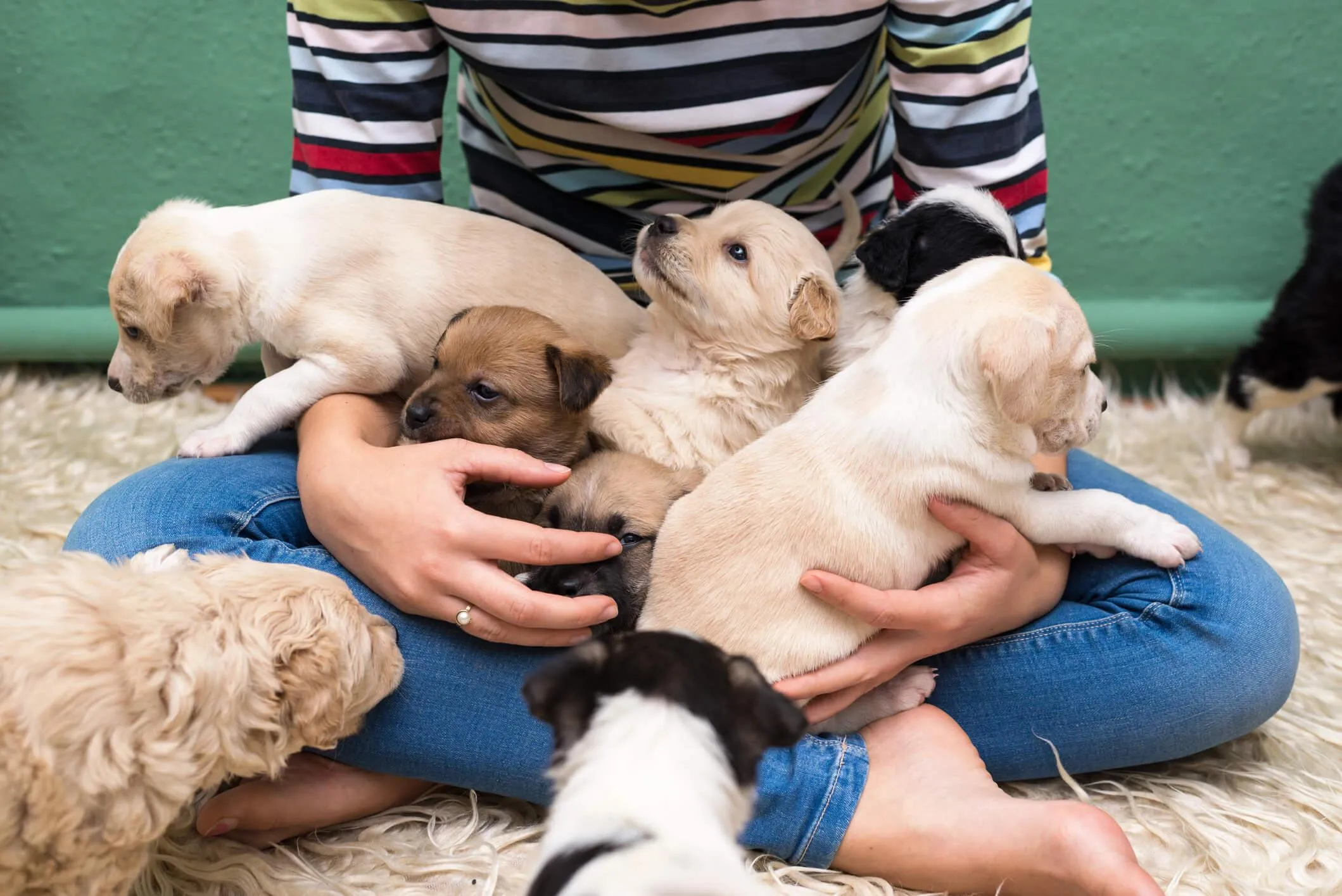
Scientific research proves that growing puppies have different nutritional needs to adult dogs. To give your puppy the best start towards a long and healthy life, it's important to provide them with a diet that's specifically designed for puppies throughout the growth phase. The length of this phase will depend on the size of the dog, with smaller breed puppies maturing much more quickly than larger breeds.
Early socialisation and training experiences leave a positive, lasting impression on a puppy and help him develop into a well-mannered adult dog. In this guide, we’ll take a look at the key milestones in the life of a puppy before it turns into an adult dog.
The best way to tell if your baby dog or puppy is healthy and developing normally is to check that they are meeting the milestones expected for their age, whether they’re energetic, and whether they finish their meals.
The development of puppies can be divided into five distinct stages:
Let’s take a look at each of these stages in detail.
Through this period, puppies are relatively helpless, relying entirely on their mother.
At this stage, the puppy spends the majority of its time either sleeping or eating. Puppies' eyes and ears are closed when they're born, but they are sensitive to touch and smell. Their eyes open at around 10-14 days old, but puppies do not respond to light and moving stimuli until the transitional period (two to three weeks of age).
During this period, a puppy will actively seek its mother. If separated from its mother, a puppy will start to vocalise and crawl, swinging its head from side to side in an attempt to find her. At this stage, puppies have a reduced ability to regulate their body temperature and so rely on their mother and littermates for body heat.
In the neonatal period, puppies are only able to feed by suckling from their mother. Urinating and defecating are stimulated by the mother licking the anogenital region, and she keeps the nest area clean by eating any waste products.
This is a period of rapid change, and you will notice your puppy beginning to show some adult characteristics, such as showing their first social signals by practising growling and wagging their tail. They will respond to light and movement as their eyes begin to open, and they start to respond to noise as their ear canals open. They will also start play-fighting with their siblings.
The puppy starts to show an interest in semi-solid food (but continues to nurse from their mother too). They can now lap water from a dish. Anogenital licking of the puppy by the mother is no longer needed now, as puppies at this age begin to relieve themselves naturally, away from the nest.
This is probably the most influential period of your puppy's life, and much of what is learned during this period may last throughout their life. During this time, they develop social skills and learn about their environment. It's essential, during the later part of this period, that they encounter as many of the people, objects and situations they might encounter in later life, including being left alone for short periods, visiting the vet, and travelling in the car.
At 3 weeks, the puppy begins showing a startle response to loud noises. They will try standing and walking and may make their first attempt at barking. Their first set of teeth, "deciduous teeth", or "milk teeth", start to erupt at this age.
6 weeks is the time for your puppy's first vaccination . At 6-8 weeks, your puppy will now be fully weaned and enjoying four or five small meals a day. Once weaned, puppies usually leave their mother and littermates to go to their new homes. Speak to the breeder or shelter about what vaccinations and worming treatments they've had.
This is a key time, as your puppy is most responsive to socialisation, so it's a good idea to experience a wide variety of situations, people, noises and environments so that they develop all-important social skills for later life.
Between 8-12 weeks, your puppy's meals can be reduced to three meals a day. This is also the timing of the puppy's second vaccination; it is important to check with your vet how many days to wait after this vaccination before your puppy is safe to go outside in public areas and meet other dogs.
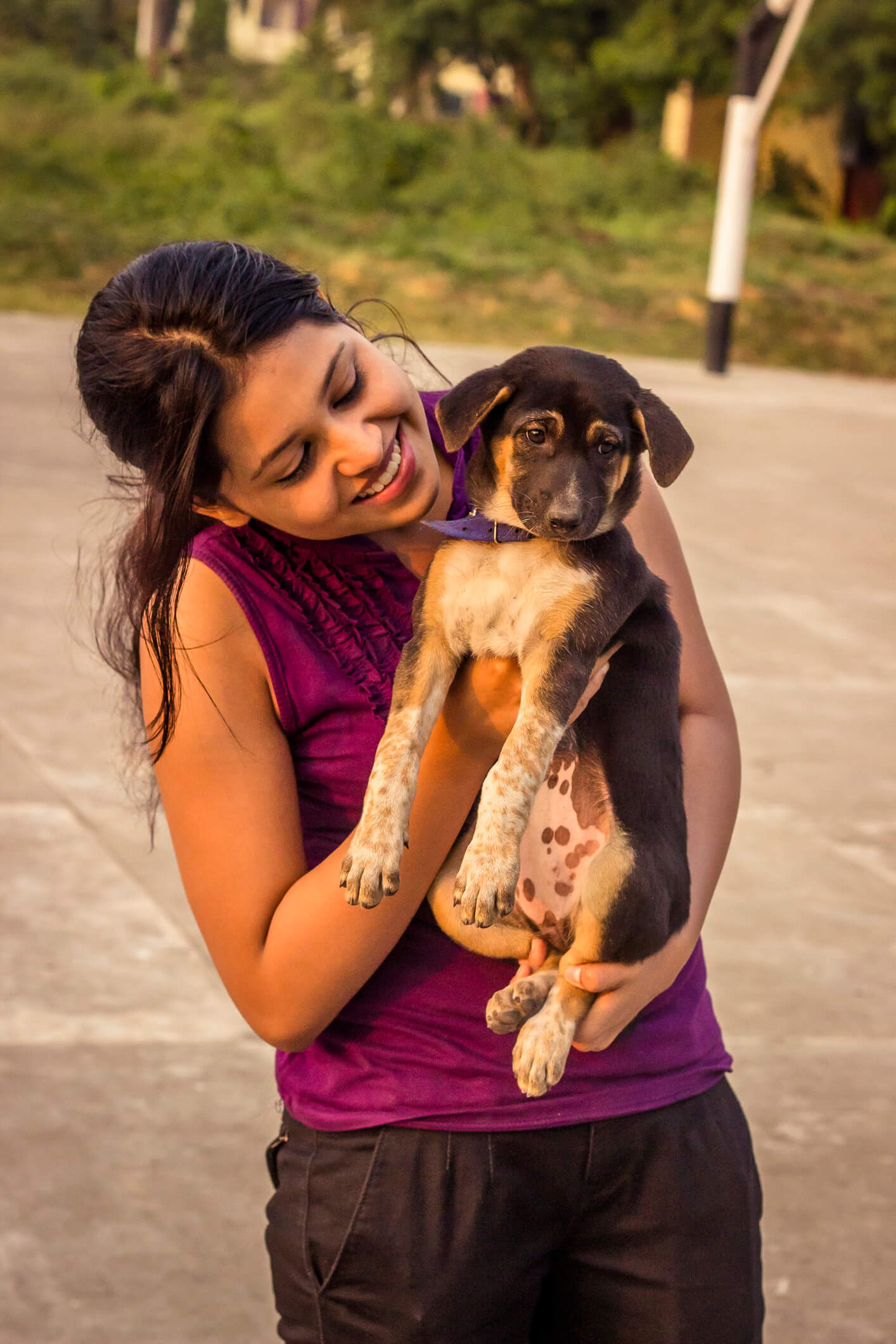
This is the last puppy development stage. By the time your puppy's growth reaches the juvenile period, most of its major changes have taken place. All of the sense organs will be fully developed, and the puppy's growth rate will slow down.
However, the juvenile period continues to adulthood, and they will need to stay on puppy food until then. This can be anywhere from one year (for smaller breeds) up to 18-24 months for large and giant breeds. During this time, your puppy will still be growing, and physiological changes will be happening that you might not be aware of.
Puppies have similar motor skills to adults by the age of six months, although this can vary according to the individual dog and their environment. And, by about seven months, adult teeth will replace the milk teeth.
You'll need to carry on socialising your puppy and introduce a training programme. Puppies have a short attention span and can be excitable, so keep training short, consistent and fun.
Puppies mature very quickly, and the smaller the breed, the faster they reach maturity. In small breeds, adolescence can start as early as 5 months. In larger breeds, it can start as late as 9 or 10 months, and very large breeds might not go through adolescence until 12-18 months.
Depending on the size of your puppy's breed, adolescence will last between a few months and a year. (After dogs reach maturity, their rate of ageing slows down. Despite the "seven years" myth, mature dogs age at the rate of about four dog years for every human year.)
When your dog reaches adolescence, you might see some or all of the following behaviours:
Every puppy's journey from birth to adolescence is a remarkable transformation, one that unfolds across distinct, carefully timed stages, each with its own physical, behavioural, and nutritional demands. With the right nutrition, early socialisation, positive training, and plenty of patience, you're giving your puppy every advantage for a long, healthy, and happy life by your side.
Review this article:
Check that your puppy is hitting age-appropriate milestones, staying energetic, and finishing meals. You can also refer to Waltham puppy growth chats and when in doubt, consult your vet.
When you transition from puppy food to dog food depends on breed size; small breeds can transition around 12 months, while large and giant breeds may need puppy food for up to 18–24 months.
The socialisation period (3–12 weeks) is the most influential. Exposing your puppy to different people, sounds, and environments during this window sets the foundation for a well-adjusted adult dog.