
Image

share:


If you've just welcomed a new puppy or dog into your home, you're no doubt very excited right now! However, there might well be a few nerves mixed in with that excitement. How are you going to teach your furry friend new things and make sure they're a well-mannered pet? Relax, we've got lots of great dog obedience training tips right here.
Obedience exercises are important for all dogs. How are you going to take your dog for a walk if they don't come back when you call them, for example? How will you get them to sit and stay when they're asked to? However, the benefits of obedience training go beyond getting your dog to behave nicely. Training also provides both mental stimulation and physical exercise.
To make obedience training a success, it's important to bear in mind the key principles of dog training. Here's a quick summary:
Most trainers and vets agree that positive reinforcement works best when training dogs. Simply put, that's rewarding good behaviour and ignoring or redirecting bad behaviour.
Again, the general consensus is that punishing your dog won't work and could make your dog scared of you.
Training sessions should be fun for both you and your dog and are best kept fairly short.
Treats can really help with training and a lot of dogs are very motivated by food! The PEDIGREE™ Tasty Minis range makes for perfect training treats, available in tasty flavours like Chicken & Duck.
When you first start training your puppy or dog, you'll have a greater chance of success if you do it somewhere quiet and free of distractions. After all, you want your furry friend's full attention!
It's really important your dog has a clear understanding of what is and isn't allowed. This means all the humans in the household have to stick to the same set of house rules. If you don't let your dog on the sofa, for example, and your partner does, the result will be one very confused pooch!
Your dog is a unique individual with a unique temperament and will learn things in their own time. With this in mind, try not to worry if they seem to take longer than you expected to 'get' certain bits of their obedience training.
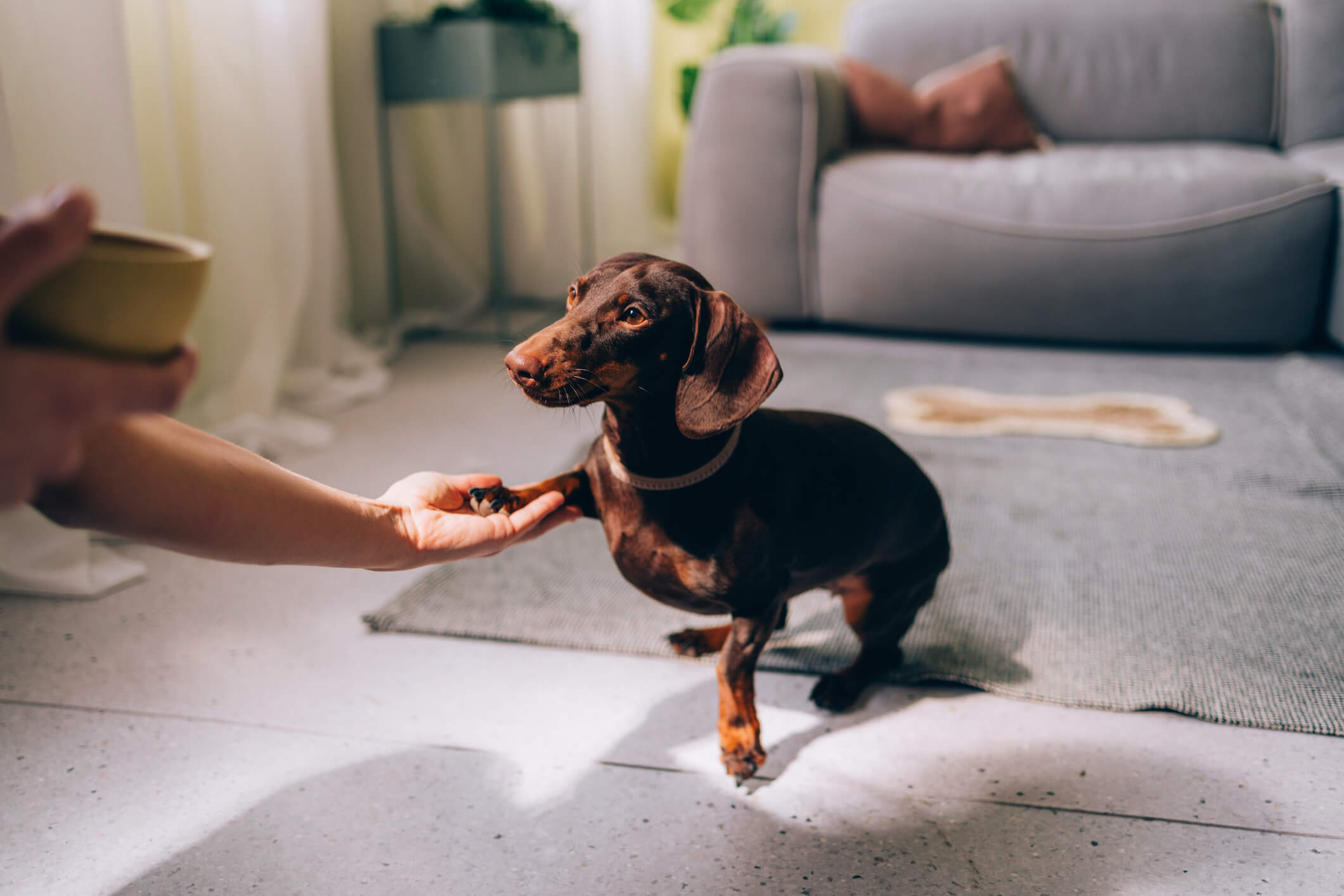
Once you bring your new dog home, it's smart to begin training immediately. There are a number of options for training your new pet. Whether you opt to train your puppy or dog yourself, take classes or hire a private trainer, you can implement these basic training tips right away to make the process easier:
It's never too late to train a dog whether you're adopting one from a shelter or just looking to brush up on a few things with a resident older pooch. You'll probably find your dog has a longer attention span than most puppies too.
The advice used to be that you shouldn't start trying to train a puppy until they are at least six months old, but many trainers and vets now believe you can start much earlier, at around two months old.
You don't need lots of expensive kit to train your dog, and these basic items should be fine:
If you have the budget, a good dog obedience school can definitely help you train your puppy or dog. Of course, not all dog obedience classes are created equal, so it's important to do your research to find a good one. In addition to looking at online reviews, it's worth asking your vet and local dog owners for recommendations.
When your dog doesn't listen to you, it can be very frustrating and even dangerous. Is your dog getting enough physical exercise and mental stimulation? Might they be stressed? Are you or other members of your household being inconsistent about what the rules are? If none of these things seems to be the problem, it's worth a chat with your vet.
Your dog has now learned the basic commands. Obedience classes can help perfect what your dog has learned, in case they're somewhat obstinate, or simply because it's more fun learning in a group. If your dog won’t listen, no matter what, talk to your vet.
How to use treats for positive reinforcement dog training | How to litterbox train my puppy | Dog biscuits and dog treats
Review this article:
"Sit!" is an exercise you can start early on. Later on, you can add "Down" and "Stay". These commands will enable you to keep your dog under control, even in unusual situations, such as stopping them from running after something and getting into danger.
Limit each exercise to five minutes, and train for no longer than 15 minutes a day, as puppies and dogs live in the moment and lose focus quickly.
When your puppy or dog jumps on a person, don't reprimand them; just turn your back on them, ignore the behaviour and wait until they settle down before giving positive reinforcement. Never encourage jumping behaviour by patting or praising your dog when they're in a "jumping up" position.
A great way to discourage a mouthy puppy is to pretend you're in a lot of pain when they bite or nip you, a sharp, loud sound should work, as most dogs are surprised enough to stop immediately. If that doesn't work, try trading a chew toy for your hand.