
Image

share:


Every new puppy owner knows the feeling of wanting to take their new companion outside for a walk, but recognising that vaccinations are required first to help keep them healthy. One of the most important things you can do for your new puppy is make sure they have all their vaccinations. These will protect them against diseases, some of which are life-threatening.
Typically, a puppy will have their first set of vaccinations at around 6-8 weeks of age and then booster every 2-3 weeks. Last dose of vaccination must be around 16-20 weeks of age This will vary by the vaccine manufacturer's guidelines and also the age at which your puppy starts their vaccinations.
If you adopt a puppy at 8 weeks old, it's likely your puppy will have had their first set of vaccinations before you bring them home, but it's important you check this.
As your puppy grows up, they'll need an annual booster vaccination to keep them safe, the first of which may come at 16-20 weeks of age. If you're unsure, check our puppy vaccine schedule guide.
A typical vaccination schedule for puppies starts with the first round of vaccinations at 6-8 weeks of age, after which adult dog vaccinations continue with a yearly booster throughout their life to maintain immunity.
These vaccines are important because puppies aren't born with fully developed immune systems, and once the temporary protection they get from their mother's milk wears off, they become vulnerable to serious and potentially fatal diseases. Keeping to the schedule ensures your dog builds and maintains protection against these illnesses at every life stage.
It's generally recommended that you wait until your puppy has immunity provided by their second set of vaccinations before they mix with other dogs or play anywhere where other dogs might have been. This will typically be two weeks after they've had those jabs, but you should always be guided by your vet.
After their first round of vaccinations, puppies can visit friends' clean private gardens and meet other vaccinated dogs indoors. They can also be carried in public to ensure they experience new sights and sounds.
Before their second set of vaccinations, though, it's important your puppy does not spend time in areas with many dogs or spots that are frequently used by dogs for urination. Take extra care until they have full protection.
When they have only had their first set of vaccinations, they can still be vulnerable to illness and disease, some of which can be very serious, such as parvovirus, which is frequently fatal if left untreated.
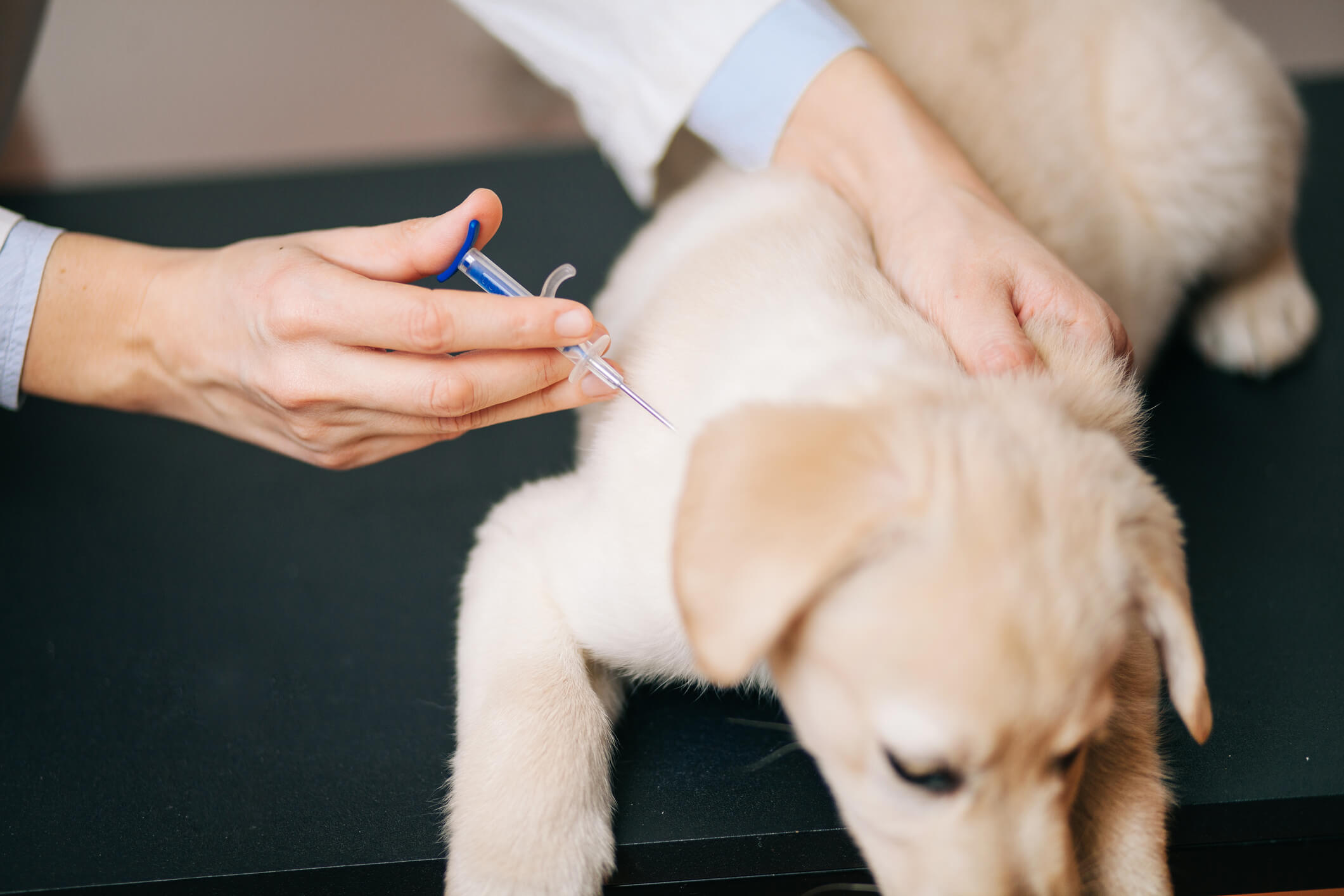
Like human babies, puppies aren't born with fully developed immune systems. This means they can't fight diseases. If they are nursed, they'll get temporary antibodies from their mother's milk but after that they need vaccinations to keep them safe.
These vaccinations (which will require an annual booster throughout your puppy's life) protect against avoidable health problems such as these:
Obviously, even a fully vaccinated pup will be under the weather from time to time. Canine colds are not uncommon. However, vaccination protects against some of the most serious preventable diseases and this is why vets recommend waiting until your puppy has full protection before exposing them to public spaces.
Though they will have some new freedoms after their first round of vaccinations, your new puppy won't have the full protection they need until their second set of vaccinations has taken effect (about two weeks afterwards, but check with your vet).
This means you have to be very careful before this and not allow your puppy to mix with other dogs or play in places other dogs have been (some diseases, such as Parvovirus, can stay in the soil for up to a year). When you need to take your puppy out, you can always carry them to keep them safe.
Public spaces aren't the only places that carry risks for your puppy, though, as the presence of stray animals and potentially stagnant water in gardens can also cause leptospirosis in your dog.
If, despite your best efforts, you suspect your dog has contracted severe gastro-enteritis (vomiting and diarrhoea), or any other disease, contact your vet immediately.
As a responsible owner, it's vital that you understand when puppies can go outside after vaccinations and how to keep them safe when doing so.
Review this article:
It is generally recommended that you wait two weeks after your puppy's second round of vaccinations before taking them outside.
Yes, if your garden has been visited by an unvaccinated dog or stray animals, there is a risk of disease or infection.
Yes, while their protection against diseases and infections is significantly higher, puppies are not considered to have full immunity until after their final booster vaccination, which typically comes at the age of 16-20 weeks old.